Wednesday, July 29, 2020

10 Customer Service Response Templates and Examples


Even when you’re a highly skilled customer support professional who’s capable of holding friendly, nuanced, and helpful conversations with your customers, some conversations can get pretty tricky. What’s the best way to tell someone they can’t have a refund or that you can’t let them log in to an account they claim to own?

To make those difficult conversations easier, we’ve put together these templates that you can use for inspiration to craft the perfect responses. Use these 10 customer service response templates and examples to craft your own replies to these tricky support requests:


“I want a phone call, now!”
A customer is demanding a phone call to solve their issue, but you don’t offer phone support and/or aren’t able to call them. They may be threatening to escalate above you or cancel altogether.

Recommended approach
In a time of stress like this, your customer can feel like you are refusing to help them at all, even though it’s really a conflict about where the help will come from.

Your answer should:
✓ Be firm about what you can and can't do
✓ Reassure the customer that you are there to help
✓ Make it clear the customer is in control
Example Response
Hi Jane,

I understand your frustration. For some customers, a lack of phone support is a deal breaker, and that’s completely understandable, but it’s not something we offer at this time.

I want to help you get you the answers you need, and we can definitely get that done by email, but I will need your help.

If you can provide the following information, that will help us track down what’s happening and figure out the best way forward.

<reiterate your specific questions>

I really appreciate your help, and I know it’s stressful when you’ve got work to do and you’re stuck like this. As soon as you reply, I’ll be automatically notified so I can start investigating for you.

You can omit this if the customer isn’t threatening to leave.

Position yourself with the customer against the problem, and gently remind them that they are the one holding up progress.

Now that you’ve reset the conversation repeat what you need to help them.

People often want phone calls because they worry about speed or being ignored.

Build their confidence by explicitly telling them what happens to their email when it arrives.

Alternative options:
➤ Offer live chat (if possible) as a perceived “faster” option to a solution.
➤ Try offering an outbound phone call, but only if you and the customer try solving it by email first and fail. “I’m confident we can solve this by email, but if we try that and still can’t get you on track, then I’d be happy to call you.”
➤ Hand off to a teammate who can focus on a solution without having the baggage of disagreeing about support channels.
“When are you going to add [feature]?”
A customer is asking for a product feature you know will not be added.

Recommended approach
It’s a compliment when your customers come to you for help because they like your work and they want it to solve more problems for them. So turning them down can be tricky, but better they know the truth than be strung along, hoping for something that will not arrive.

Your answer should:
✓ Be honest about the situation
✓ Explain why
✓ Acknowledge their need and address it if possible
Example Response
Hi Tom,

Thanks for the suggestion; I appreciate you explaining how it would help you out. While that feature isn’t currently in our development roadmap, we are working on big improvements that will be helpful for the majority of our customers, and you’ll see those rolling out soon.

While we can’t build exactly what you’re after, I do have a suggestion that might get you most of what you need.

<your suggested workaround>

Thanks again for taking the time to talk to us! We always appreciate feedback and suggestions.

If it’s a “never, ever” you can use a stronger version here. “It’s not something we will be building in".

We're not saying “no” to you, we’re saying “yes” to as many people as we can at once.

Only offer this when you have a genuinely useful option. If it’s too complex or not good enough, just leave it out.

Alternative options:
➤ If you have a public roadmap, link to it and share some of the upcoming improvements.
➤ Sometimes, your customer would be better off with a different product, and you may help them by offering that option.
“I want a refund!”
When you can’t (or have decided not to) offer the customer a refund.

Recommended approach
Asking for a refund is often a sign that the customer feels like they haven’t gotten value from your product. If you can acknowledge and address that issue, the refund may become less important to them.

Your answer should:
✓ Be explicit and give a reason if possible
✓ Dig for the underlying cause
✓ Listen carefully
Example Response
Hi Li Wei,

I’m sorry to hear you’re not happy with our product. While I’m unable to offer a refund (please see our terms and conditions here), I can *<offer a billing extension/store credit/other alternative>*

As we arrange that, though, I would love to understand your situation better and see if there’s any other way we can help.

Could you give me a little more detail about what you needed to get done? It looks like <your best understanding of what they are trying to do, and where they got stuck>, is that right?

If you have a few moments to elaborate on that, I can talk to the team here, and we can give you our best advice.

Be upfront about your decision to avoid misunderstandings.

If you have a policy on refunds, link to it directly.

Give your support team a range of non-refund options if you can.

Alternative options:
➤ For small refunds, the cost of discussing it with the customer may well exceed the funds saved. Perhaps you can just give the refund and invest in long term goodwill.
➤ Even when you can offer a refund, a refund request is an opportunity to understand your customer’s needs better. Let them know you are happy to refund, but then open up the conversation to understand why. Sometimes they won’t even want a refund at the end of the conversation.”
➤ A clearly written and accessible refund policy will make these conversations easier.
“Tweet me back”
When your customer is on a social channel, but you need to move them over to another channel to answer effectively.

Recommended approach
You should respect the customer's choice wherever you can, but if you need to move them, explain why and reassure them that you will resolve their question. Read "Migrating a Customer Query Between Support Channels" for more details.

Your answer should:
✓ Smoothly transfer information
✓ Minimize the work of the customer
✓ Retain customer confidence
Example Response
@hannah Sorry for the trouble, let’s get this sorted out. We'll need to loop in our engineers, so I’ve started an email thread for you, with all the relevant information you’ve shared. It should be in your account email inbox now. I'll see you over there!

Explain why you need to have them switch channels.

Reassure the customer that they won't have to repeat themselves.

Keeping the same team member in the conversation builds confidence.

Alternative options:
➤ Whenever possible, take the question to completion in the same channel your customer began it in.
➤ Explain the issue, and let your customer choose an alternate channel from the possible options.
➤ In the case of legal restrictions, make it clear up front where you can and can't help people.
“Bring back the file export feature!!!!!”
A customer is upset that a feature or product has been removed.

Recommended approach
You know how it feels when you lose access to something you value, so make sure to express that empathy, but also give your customer context.

Your answer should:
✓ Empathize with the customer
✓ Give them context on why the change was made
✓ Present the hopeful future
Example Response
Hi Marcin,

Thanks for letting us know about your situation. I can understand that it’s frustrating to lose a feature that you’ve come to rely on like that. While it’s not something we plan to replace, I can give you a bit more detail about why we made the change and how it will hopefully benefit you in the long term.

The short answer is that this was a complex feature to maintain. It wasn’t being used by the majority of our customers, which meant we were spending a lot of development time and resources on something that wasn’t making our product better for most people.

By making the hard decision to drop it, we’ve been able to move those resources into new areas like <x> and <y>, and you’ll now see those improvements launched and available in your account much sooner than we otherwise could have achieved.

I realize that doesn’t solve your immediate issue, though. Some of our other customers have found that <alternative> is a good substitute for that functionality. If you’d like to share more detail on how you were using it, I’d be happy to give you my best advice.

If it’s never going to happen, it's more kind to make that clear right away than leave them hoping for it.

Instead of over-apologizing for the removal, focus on what benefits that removal allows for all customers.

Alternative options:
➤ If this is not a “set in stone” decision and could be rolled back, then be sure to not just record the feedback, but ask questions to understand the particular usage of each customer. The answer may not be rolling back, for example; it may be changing future plans to allow for other use cases.
“I need access to this account!”
A customer wants access to an account, but can’t (or won’t) pass security.

Recommended approach
Customer service teams are increasingly the target of social engineering attacks. Being secure while also providing service is a tricky line to walk.

Your answer should:
✓ Be clear about what is needed to give access
✓ Position your team as a protector, not a blocker
✓ Rely on published policies
Example Response
Hello Rafi,

I understand you just want to get into your account and back to work, and I am here to help you. However, as I’m sure you can understand, we have to be careful to protect the details that you and all of our customers trust us to store. You can read up on our security policy and practices here: <url>

Here’s what you can do to regain access to your account:

<reiterate your steps in bulleted list>
If any of those steps are unclear, let me know, and I’m happy to explain further. I know it’s stressful, but for the protection of all of our customers (and to comply with information security laws) I’m unable to give you access otherwise.

Thank you for your understanding.

Align yourself and your customer against outside people who might try to access their data.

Mentioning legal constraints (if any) can be helpful and most people will more easily accept that reason.

Alternative options:
➤ Security isn’t really an area for workarounds, but you can reduce some of the stress by having public policies and directions on how to regain account access (and what happens if they can’t).
“Your plugin is failing, bigly!”
A customer needs support for a third-party tool or system about which you can’t answer detailed questions.

Recommended approach
Customers don’t always know the right person to contact when they run into issues. Make the process as smooth as possible for them, even if you have to send them elsewhere.

Your answer should:
✓ Tell them why you are sending them away
✓ Make it easy for them to take the necessary steps
✓ Be clear that you’re still there to support them
Example Response
Hey Priya,

I’d love to help you with this, but I’m afraid we don’t have access to that information on our side. I can help you with questions relating to (our product), but in this case, the <other system> support team will be best positioned to investigate and help you move forward.

To save you some time I’ve looked up their support options, and you can send your question in here: <contact link>

It may be helpful to include this information in your request: <your clearer explanation of the issue>

If their team needs any further information from our side, just let us know and we can pass that on. Sorry I couldn’t be of more help directly, but thanks again for using <our service> and best of luck getting this issue resolved quickly.

Add some details about why you are unable to help them out.

Improve their chances of success by helping them write a clear support question to the third-party team.

Alternative options:
➤ If your team has developed some skills in the third-party system, consider creating your own knowledge base entries for the most common issues.
➤ For really high value relationships, consider submitting a question to the third party yourself, looping the customer in so you can monitor their experience and jump in if necessary.
➤ If you have a software product, try to make it easier for customers to identify third-party issues by writing clearer error messages.
“I can’t believe it still hasn’t arrived!”
You’ve told the customer what will happen, but they’re angry about waiting after 2 days (for example).

Recommended approach
From your side, everything is working exactly as it should, yet the customer is still upset. Try to reframe it in your head as a customer who is so keen for your product that the wait is upsetting them, instead of a customer who is unreasonably angry about reality! Then be empathetic and take the customer’s side, even when nothing can be changed.

Your answer should:
✓ Avoid being pointlessly defensive
✓ Align yourself with the customer
✓ Give them a chance to feel heard, not blamed
✓ Avoid accepting blame incorrectly
Example Response
Hi Iminathi,

I can totally appreciate how frustrating it is to be waiting for your delivery, I wish there were a way for us to get it to you sooner (when will those Star Trek transports be invented!). It might help to start with some background on what happens on our end once you place an order:

When you ordered, the shipping process started on that same day automatically. Your package was picked up from our warehouse on *<date>* and it’s now with Planet Express, so it is well on the way to you. You should receive delivery on *<date>*, according to their last update.

To help you know what to expect, during the ordering process we show an estimated delivery date, perhaps that wasn't visible enough for you? I’d love your feedback on that so we can improve for the future. In this case it looks like we’re going to beat that estimate by about 3 days.

Once your parcel arrives, if there are any issues at all please hit reply and we can get right back to you.

Just naming this will help them feel acknowledged - the customer wants the goods, you want them to have the goods.

Offering them some more detail into what happens can help them understand the time taken, and build their confidence that this is all normal.

This paragraph points out that you did try to let them know, but in a way that leaves the customer an opportunity to give you feedback and not feel like you’re blaming them for not seeing it. Consider including a screenshotfor clarity.

Reinforce that they will be receiving it soon, and that you’re still there to help.

Alternative options:
➤ If you see a genuine issue with the information provided up front being unclear, tell the customer what you’re going to do about it to help future purchasers.
➤ Offer to contact the delivery provider and pass on more detail about how the delivery process works.
“I’m not doing your job for you”
Your customer has a tricky problem, but they refuse to provide you with the troubleshooting information you need to help them.

Recommended approach
A customer who is not experienced in technical troubleshooting may not have an understanding of the iterative, trial and error approach that can sometimes be required. You need to be a little more explicit about what the process will be, and why it’s worth their time to help you help them.

Your answer should:
✓ Avoid making ultimatums
✓ Convince the customer you need their help
✓ Be explicit about what you need
✓ Show them a positive outcome is coming
Example Response
Hi Joao,

 I can understand that it is frustrating to contact us about a problem and have me ask you to do some work! I’d be frustrated too in your position. It’s true that I really do need your help to figure this out, but I should have explained earlier how I’ll use the information I asked for to get this problem sorted as quickly as possible.

Once you send me the following:
*<required information>*

My next step will be to replicate that same setup on our side. Then I’ll be able to tell if it’s something broken on our side, and work with our developers on it. If not, then it’s possible there’s something specific to your setup that we will need to dig into together.

Narrowing the problem down in that way will make it much faster for our team here to help you, because we won’t have to waste your time while we’re testing systems that don’t apply to your case.

I’ve set a notice on this conversation so that once you reply, it will come right back to me and I can keep this moving for you. I look forward to hearing from you, and thanks again for your help.

Put yourself in their shoes—in your head, you’re already thinking of what you’ll test next, and how you’ll move closer to an answer. They don’t know that yet.

Reiterate in detail what you need your customer to provide you with, and link them to resources for how to get it if necessary.

Adapt this section for the specific situation—technical troubleshooting, identifying their account, whatever applies.

Flip their concern to show how you are valuing their time by reducing wasted effort (and gently remind them that the ball is in their court).

Alternative options:
➤ If you’ve tried and failed to elicit their help, at least be clear that you are ready and willing to help as soon as the information has been provided.
➤ Tell a story about another customer who faced a similarly tricky issue, and who worked with you to get it resolved.
“I need a discount!”
When a customer does not want to pay the stated price.

Recommended approach
While your price may be non-negotiable, you can still demonstrate value and help your customers get more for their money. For more help, read "How to Deal With ’Tightwad’ Customers".

Your answer should:
✓ Remain firm on the price
✓ Help the customer understand the value
✓ Offer useful options
Example Response
Hi Arjun,

We really appreciate your business with us! While we don't offer discounts, I do want to make sure you're getting the most you can for your money. You mentioned that XYZ Widget is cheaper, but there are a couple of key differences you might not know about.

Of course, I can understand that you may have an immediate need to reduce your ongoing costs. If that’s the case then I have a couple of options for you:

You could move down to our basic plan, and save $Y, though you would lose accesss to <features> that I can see you’re frequently using.
If we can help you understand these options better, or if you’d like help getting more out of your account, hit reply and let us know! We’re here to help whenever you need it.

Thursday, June 18, 2020

10 inspiring customer satisfaction quotes (and the stories behind them)

By helping millions of businesses learn more about their customers (psst, our ultimate customer feedback guide can help you do the same), we like to think we know a thing or two about customer satisfaction. For example, we’ve learned that businesses who measure customer satisfaction are a third more likely to consider themselves successful than those who don’t. They're also significantly more likely to have happier, more engaged employees.

But we’re also inspired by business leaders and innovators whose experiences remind us who’s really number one. Get (even more!) fired up about putting your customers first by checking out our favorite customer satisfaction quotes:

Related: 5 customer experience examples you should know about.

The customer only rings twice
quote
The single most important thing is to make people happy. If you are making people happy, as a side effect, they will be happy to open up their wallets and pay you.

Derek Sivers, Founder CD Baby
Derek Sivers founded a website called CD Baby in 1997. Although Sivers considers himself an accidental entrepreneur, he did something very important from the beginning. What Sivers did was focus on making artists and customers as happy as possible. Because Sivers made serving both groups the top priority as he built the company, he was able to thrive in the competitive music market.

As Sivers explains in the following quote, his commitment to customer service was much more than a vague philosophy. Instead, this priority influenced the company’s daily activities:

quote
If anybody ever called our number, it would be picked up in less than 2 rings with a friendly voice answering, “CD Baby.” From 7 am to 10 pm, there was always somebody to pick up a call in 2 rings. No voice mail system; no routing to different departments. We treated our customers like our best friends. You don’t route your best friend’s call to an automated system!

Derek Sivers
Thanks to his unwavering commitment to customer service, Sivers built CD Baby into the web’s largest seller of independent music and eventually sold the company in 2008 for $22 million.

Amazing customer service is THE competitive advantage
Derek Sivers isn’t the only 90's Internet entrepreneur who realized that while the web was opening up an entirely new business landscape, its digital nature wasn’t an excuse to limit customer interactions to a database.

Although plenty of tech companies have operated under the misguided principle that you have to basically ignore customers in order to blaze a path for the future, one of the most successful founders in technology has a different view on this subject:

quote
If you’re competitor focused, you have to wait until there is a competitor doing something. Being customer focused allows you to be more pioneering.

Jeff Bezos, Founder of Amazon.com
In 2009, Bezos literally put his money where his mouth is by purchasing Zappos for $1.2 billion. While Amazon had all the technology requirements to sell shoes through their own site, they decided to buy Zappos because of the company’s fantastic customer service. Not surprisingly, Zappos’ founder Tony Hsieh was able to share an incredible quote about customer satisfaction in just thirteen words:

quote
Customer service shouldn’t just be a department, it should be the entire company.

Tony Hsieh
Actions speak louder than quotes
When the National Retail Federation released their 2011 Customer’s Choice Awards, Amazon ranked #1 for customer service, while Zappos was #3 on the list. The company that fell in between the two was L.L. Bean. With a history that dates back to 1912, it would be easy for the company to get complacent about customer service. However, its CEO, Christopher McCormick, did a great job of explaining how L.L. Bean has managed to keep their customer service at such a high level of performance:

quote
A lot of people have fancy things to say about customer service, but it’s just a day-in, day-out, ongoing, never-ending, persevering, compassionate kind of activity.

Christopher McCormick
Great customer service makes life easier for everyone
One of the biggest misconceptions across the entire business landscape is that providing great customer service is a big drain on other resources. The reality is that doing customer service right optimizes resource allocation and increases employee happiness. Horst Schulze, the former President of Ritz-Carlton, explained the importance of customer satisfaction to his success:

quote
We are superior to the competition because we hire employees who work in an environment of belonging and purpose. We foster a climate where the employee can deliver what the customer wants. You cannot deliver what the customer wants by controlling the employee.

Horst Schulze
Even though some may dismiss Schulze’s quote as only applying to businesses in the service industry, the clarity provided by making customers #1 works for any business:

And while most people would prefer to spend their time speaking with happy customers, Bill Gates realized early on that angry customers shouldn’t be written off as a source of headaches:

quote
Your most unhappy customers are your greatest source of learning.

Bill Gates
Related: The 3 best ways to measure the customer experience

The key to building a company that stands the test of time

It’s not possible to predict with complete accuracy how technology is going to impact different industries over the next decade or even the next few months. That being said, one thing you can fully control is how your company services its customers. As the writer and lecturer Dale Carnegie said over half a century ago:

quote
You can close more business in two months by becoming interested in other people than you can in two years by trying to get people interested in you.

Dale Carnegie
Staying focused on building a business that provides customers with the best experience possible will empower you to handle whatever challenges may come up along the way. That fact will be just as true in twenty years as it was when this Chinese proverb was shared:

quote
A man without a smiling face must not open a shop.

Chinese proverb
Stop quoting and start doing
Now that you’re inspired, what are you going to do to deliver customer satisfaction? We’d recommend you start by giving your customers a voice and seeing where you stand. Are you a smiling shopkeeper? Are your employees as engaged as those at the Ritz? Do your customers feel like your whole company is the customer service department? Customer satisfaction surveys can be a great way to make sure your story will some day be worthy of a good quote.

Get the Free Customer Feedback Guide from SurveyMonkey!

Friday, May 22, 2020

20 BEST THANK YOU MESSAGES AND QUOTES TO SHOW CUSTOMER APPRECIATION


A good business practice is say thank you to your new and returning customers. A good thank you quote or message will help build that strong customer loyalty that keeps your business afloat.

20 Best Thank You Messages And Quotes To Show Customer Appreciation

Most forms of customer thank you messages come in the form of email with the abundance of online ordering. You can still include a thank you message note if you send out your product to your customer.

TIPS FOR SENDING OUT THANK YOU MESSAGES TO YOUR CUSTOMERS
BUSINESS THANK YOU EMAILS
Keep your message brief but still memorable.
Send your email immediately after purchase.
If it is an email, say something positive in the subject line.
Your thank you email should be just that, a thank you. Do not attempt to sell more in a thank you email.
Some businesses offer a future discount or promo in their thank you email.
You may want to follow up later with a customer feedback email.
BUSINESS THANK YOU NOTES
Personalize it, if possible.
If you’re including your thank you note in the package, make it a different size and noticeable so your customer will be able to find it easily.
Include your branding in your thank you note.
Handwrite your name or business, if possible.

A Message from annieselke.com/memorial_sale/Pine_Cone_Hill
Pine Cone Hill® Outlet Quilts - 20% Off Memorial Day Sale
Memorial Day Sale: For a limited time take 20% off everything Pine Cone Hill . Make Your Space Sensational With Pine Cone Hill Quilts. Shop Today!
SEE MORE
Report this ad
Mediavine
HERE ARE 20 BEST THANK YOU MESSAGES AND QUOTES TO SHOW CUSTOMER APPRECIATION
20 Best Thank You Messages And Quotes To Show Customer Appreciation
1) Thank you for your purchase from [company name]. Please let us know if we can do anything else to help!

2) Just wanted to say thank you for your purchase. We’re so lucky to have customers like you!


Report this ad
Mediavine
3)Thank you for being an [company name] customer. We sincerely appreciate your business and hope you come back soon!

4) [company name] has the best customers! Thank you sooo much for your support!

5) Thank you for being our valued customer. We are so grateful for the pleasure of serving you and hope we met your expectations.

6) Thank you so your support. We truly appreciate your business and look forward to serving you again.

7) We at [company name] truly appreciate your business, and we’re so grateful for the trust you’ve placed in us. We sincerely hope you are satisfied with your purchase.

8) Thanks for shopping at [company name]. We hope to have the pleasure of doing business with you in the future.

9) We at [company name]know you had many options to choose from, we thank you for choosing us.

10) Thank you for your business and your trust. It is our pleasure to work with you.

20 Best Thank You Messages And Quotes To Show Customer Appreciation


11) Thank you so much for your business. We are honored to have clients like you.

12) You are the reason [company name] does what we do. Thank you for being a loyal customer.

13) Thank you. We hope your experience was awesome and we can’t wait to see you again soon.

14) Thank you for the privilege of your business. Please let us know if we can help in the future.

15) Because of loyal customers like you, we’re exciting that [company name] is growing so fast. Thank you!

16) Hope you are happy with your purchase! Thank you for being a valued [company name] customer!

17) Thank you for making your first purchase with [company name]! We’re so glad that you found what you were looking for.

18) Thank you for hiring [company name] We appreciate your business, and we’ll do our best to continue to give you the kind of service you deserve.

19) [company name] would like to thank awesome customers like you for your amazing support! You rock!

20) Your support means the world to us! Thank for your business. Hope to work with you again in the future.

RELATED:

20 Best Thank You Messages And Quotes To Show Customer Appreciation. Grow your business customer loyalty with a thank you card or email #thankyounotes #thankyouquotes #thankyoumessages


« 20 THOUGHTFUL THANK YOU MESSAGES FOR BIRTHDAY GIFTS25 BEST BIRTHDAY TEXT MESSAGES FOR THAT SPECIAL PERSON IN YOUR LIFE »
YOU MAY ALSO LIKE
7 Best Employee Introduction Email Samples To Welcome Your New Hire7 Best Employee Introduction Email Samples To Welcome Your New Hire17 Best Thank You Messages For Gifts That Could Work For Any Occasion17 Best Thank You Messages For Gifts That Could Work For Any Occasion21 Best Thank You Messages and Appreciation Quote For Your Boss21 Best Thank You Messages and Appreciation Quote For Your Boss20 Thoughtful Thank You Messages For Birthday Gifts20 Thoughtful Thank You Messages For Birthday Gifts18 Best Out Of Office Auto Messages To Use For Your Next Leave18 Best Out Of Office Auto Messages To Use For Your Next Leave
Search
 

TRENDING NOW
20 Best Thank You Messages And Quotes To Show Customer Appreciation
50+ Clever Space Puns That Are Out Of This World Hilarious
7 Best Employee Introduction Email Samples To Welcome Your New Hire
Happy Valentine’s Day Husband! 50+ Sweetest Valentine Messages For Him
25 A-Glaze-ing Donut Puns That You’ll Love Dough Much

Report this ad
Mediavine
RECENT POSTS
Happy Birthday Mom! 50+ Best Birthday Wishes And Quotes For Your Mother
Happy Birthday Beautiful! 50+ Best Birthday Quotes And Wishes For Her
Good Night My Love: 100+ Sweetest Good Night Text Messages and Quotes
The Right Wording is a participant in the Amazon Services LLC Associates Program, an affiliate advertising program designed to provide a means for sites to earn advertising fees by advertising and linking to Amazon.

COPYRIGHT 2019 THE RIGHT WORDING
EXCLUSIVE MEMBER OF MEDIAVINE HOME

Wednesday, May 20, 2020

How to Say Thanks to a Client or Customer for Their Business

Tips for y lovely website links is down below

Too often, sales teams are caught up in filling their pipelines with the next batch of leads or following up with prospects.

The funny thing is, the most valuable part of your pipeline is the people who've already purchased something from you. On average, 20% of a company's customers are responsible for 80% of their future profits, so it makes sense to take care of them.

Sure, saying thank you is a polite gesture. But if you say it the right way, it can cement your relationship with that customer (and guarantee their future business).

We’re going to look at:

  • Why it’s important to say thank you
  • What takes a thank you from “good” to “great”
  • How to send the perfect thank you
    • In a note
    • In a letter
    • In an email

Let's dive in!

Why it’s important to say thank you

Hearing a “thank you” is always nice. But when you say it to a customer (the right way), it can mean a lot more.

You’re not only acknowledging their business and showing them you appreciate it, but you’re also planting the seeds of building your brand loyalty. It shows them that you’re not just another faceless revenue machine—you appreciate their business.

But how much do customers care about feeling appreciated? It turns out they care a whole lot.

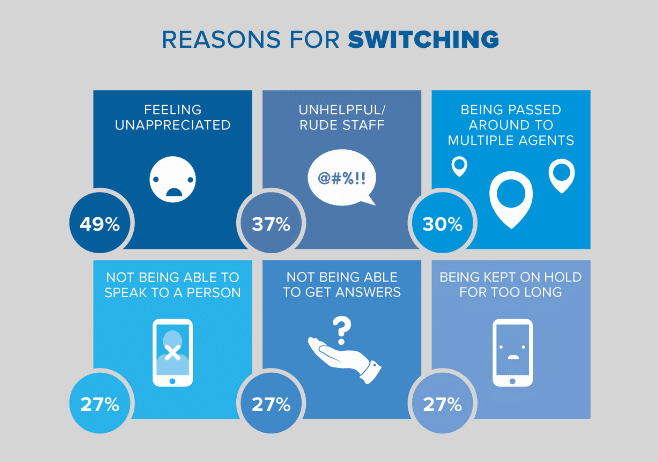
A study by NewVoiceMedia found that feeling unappreciated is the top reason customers switch companies:

customer appreciation stats
BUT HOW MUCH WEIGHT DOES A “THANK YOU” CARRY IN A REAL-LIFE SITUATION?

After a bunch of hard sells from companies (and only one call to say thank you), Marketing Consultant Jeffrey Slater decided to run a "thank you experiment."

After he received the single thank you call, he asked the company's owner to test something out. He told him to get his ten sales reps to call up each of their customers (who’d bought something in the last 18 months) and deliver the same thank you message.

The result? He started seeing a 10% increase in orders from those customers.

The reason this tactic worked? Well, saying thank you is not only simple; it's sincere. In today's digital world, we don't get nearly enough face-to-face time with our customers. Sending a sincere thank you (no matter if it's by phone or snail mail) is a way for us to nurture relationships and shake our customer's hand (digitally).

So, now that you know why you should say thank you, how do you do it?

What takes a thank you from “good” to “great”

The most important part of taking a "thank you" from good to great is making it genuine. Start it on a high, personalize the middle, and round it off with another thank you.

Start it on a high

Start your thank you on a positive note. Whether you're sending a handwritten note or an email, make sure it gives off a positive vibe from the moment it lands in your customer's inbox (or mailbox).

For email thank yous, this is especially important—only 7% of customers prefer being thanked over email, so don't hold back on giving your email the best shot at being opened. Personalizing an email’s subject line can increase its open rate by 50%, so try something like "Thanks for being an awesome customer, (customer's name)."

One rule of thumb is to include words like “thank you,” “valued,” or “appreciated” (if you don’t like these specific ones, that’s fine, just use a thesaurus) in the intro of the thank you. Communicating your sincere gratitude is the key here.

Personalize it

No matter if you’re saying thank you in a note or an email, personalizing it is the easiest way to make it more genuine.

For example, mention something significant that happened over the time that your customer has been with you. If they've launched a new product or won an award, mention it in your thank you. It could look something like:

"I just wanted to say thank you for the last year of working together; it's been a blast! Even better that we got to see your company take home the (insert their company's milestone/award win, etc.)”

Cement your future relationship

Next, indicate that you’re looking forward to continuing your working relationship with them.

“We really appreciate you as a customer, and as you’re someone who has used our product for the last year, we would love to hear if you have any additional feedback or questions about using it. As always, I’m here for you over phone or email. I look forward to hearing from you soon about (insert upcoming milestone/product launch etc. your customer is working towards)!”

This reinforces that you appreciate them as a customer, which means you’ll do what it takes to keep their business over the long term.

Hit them with another thank you

Keep it simple. Finish it off with something short and sweet like “Thanks again for a super first year together—looking forward to many more to come!”

The sign off is a chance to add in a last bit of personalization to the thank you.

Pro-tip: Don't just say "thank you for your business." It's impersonal, and the opposite of the genuine thank you that you're aiming to get across. You’re trying to strengthen your relationship, not a continued business transaction.

How to build the perfect thank you

Saying thank you at the right time can make just as much impact on a customer as the thank you itself.

Step 1. Look into your customer database for milestones/anniversaries

The first step of writing out a thank you note is deciding why you’re sending it.

Has the customer been with you for a significant amount of time? Is it their company’s birthday? Or maybe they just celebrated a massive product launch, and it’s time to show them some love.

Whatever the reason, timing is everything and can make the thank you even more powerful.

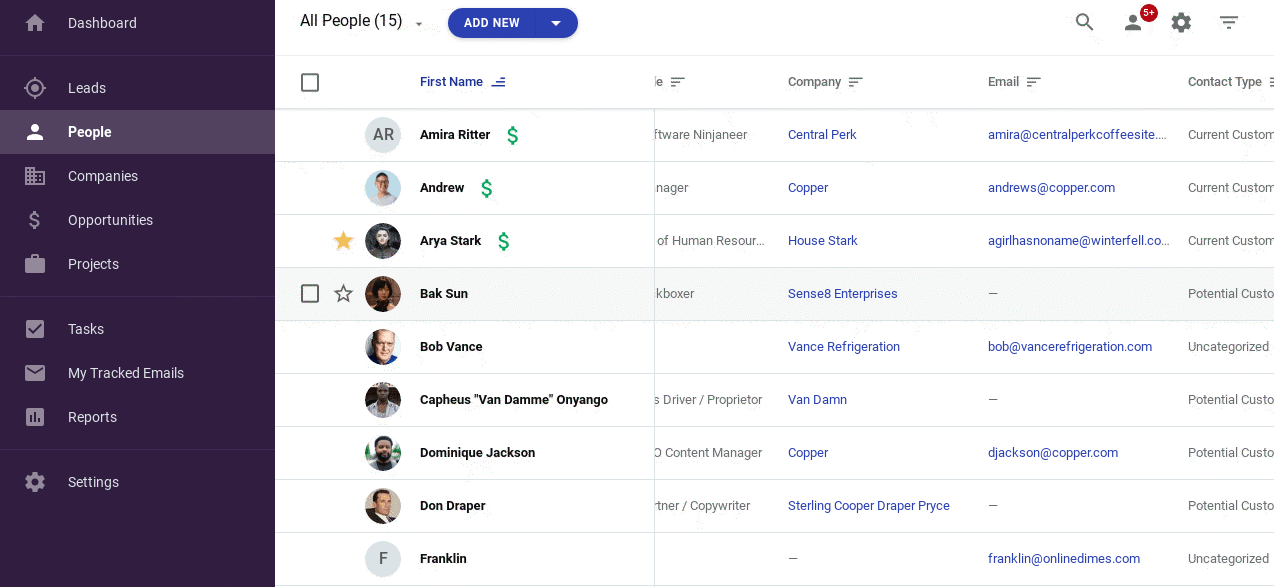
If you’re using a CRM, it’s easier to nail the timing and delivery of your thank you. All you need to do is pull up your customer list:

customer records in copper crm
COPPER ALLOWS YOU TO PULL UP THEIR ENTIRE CLIENT LIST SO IT’S EASIER TO SKIM FOR ANNIVERSARIES AND BIRTHDAYS.

Next, check your customer’s notes.

If your team has been storing information about your customers’ milestones and feedback about your product—and they should be—now is the time to use it. (Conveniently, it's also the key to customer retention.)

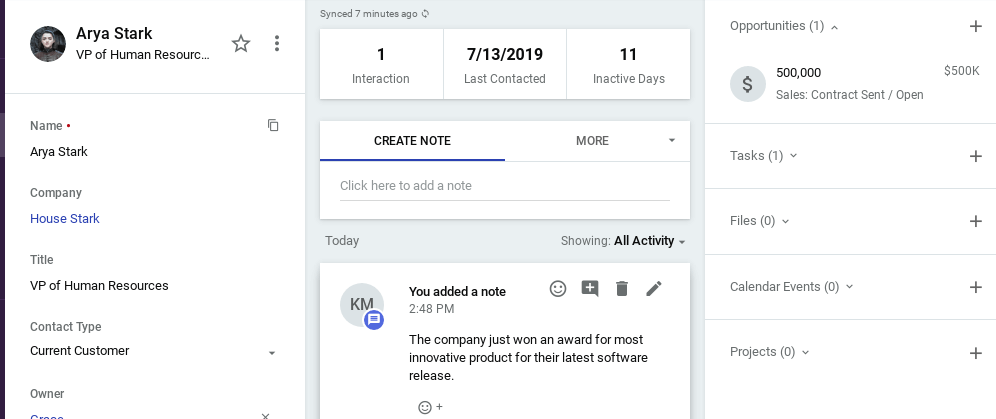
Referencing seemingly minor (they won’t be minor to your customers) details like these can take your thank you to the next level:

customer milestones in copper crm
IN COPPER, YOU CAN KEEP NOTES ON YOUR CUSTOMER’S MILESTONES SO IT’S EASIER TO PERSONALIZE THANK YOU NOTES IN THE FUTURE.

Once you know why you’re reaching out to say thanks and how you’re going to tailor it to your customer, narrow down how to deliver it in the next step.

PRO-TIP

🚀 your productivity

Learn about the thousands of other tasks your CRM can take off your plate for you with this handbook.

Step 2. Decide how to deliver your thank you

Not all thank yous are made the same.

Depending on the reason for saying thanks to your customer, there are a couple of different ways you can deliver it:

  • By note (If it's for a relatively minor thing, like thanking your customer for their feedback on your product)
  • By letter (If it’s for a high-ticket client, or you need to make it a bit more serious)
  • By email (If you want to keep it informal and fun)

Say thanks in a note

Sending an old-school, handwritten note is up there with the most sincere ways you can thank a customer. Handwritten notes have an 80% open rate, so sending a thank you via snail mail has a much higher chance of being read by a customer than if you were to use another avenue like email.

Writing a thank you note doesn't cost much, and it doesn't take much time either. But what it will get across to your customer or client is that you took time out of your day to thank them for being great to work with.

When you’re writing your note, be sure to:

  • Greet your client by name
  • Express your gratitude and clearly state why you’re sending the note
  • Include details about why you enjoyed your experience with this customer (be specific and personalize it as much as possible)
  • Repeat your thanks
  • Close with a sign-off and sign your name. If your relationship with your client is formal, you can sign off with a "best/regards." If it's more casual, don't be afraid to mix it up and inject a bit of personality into your sign-off by saying something that feels more natural, like "cheers."

Here’s an example of what a thank you note might look like:

Hey (customer’s name)!

Thank you so much for the wild ride we've had over the past year. It's been amazing to see your business achieve (insert achievement) and watch your customer base grow as a result. We especially appreciated you reaching out to help us with (insert any feedback/recommendations made by the customer), it's helped us a lot. We're so chuffed you've chosen (your company name) to go on this ride with you — thanks for giving us the chance to help you grow!

Cheers,

(your name) and the (your company) team

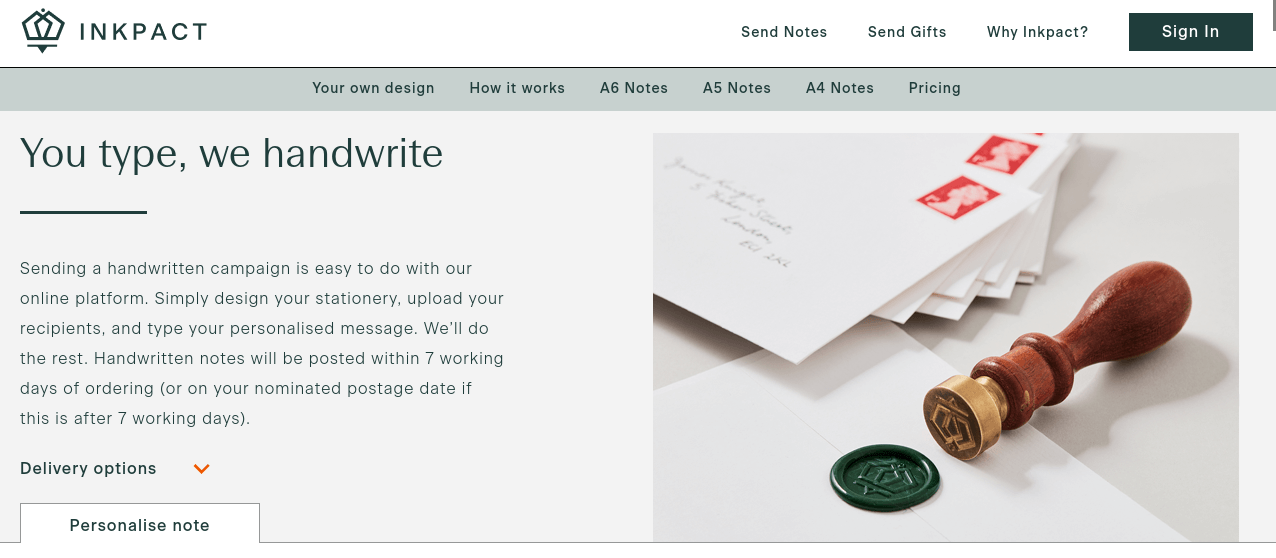
Pro-tip: If you have many customers to thank and not a lot of time, companies like Inkpact can send handwritten notes to your customers for you. Just type out your message, and they’ll take care of the other stuff like printing and posting:

inkpact customer thank you notes

2. Say thanks in a letter

If your customer is a big-ticket or more traditional client, sending them a brief note might not seem like enough.

In cases like this, you may want to send a formal thank you letter instead. For example, if you teamed up with a client on a case study or they referred a lot of business your way, you might want to say thank you with a slightly higher level of appreciation.

The thing about thank you letters is, the timing matters. If you're thanking a client for a referral, you need to send the letter when the referral is still fresh. Or, if you're thanking a client for cooperating on a case study, the thank you letter should coincide with its release to make more of an impact.

A thank you letter might look something like this:

Dear (client/customer),

Thank you so much for all of your help with getting our recent case study on your business published. Your expertise and insight into how our business is helping you achieve your goals were hugely appreciated by our Marketing team.

Our Product team in particularly loved how you’ve found unique ways to adapt (product feature) and (product feature) to fit your campaigns. We really appreciate you pointing these out to us, as they not only help with the ongoing development of our product, but they also show our newer customers what’s possible.

In the meantime, if we can do anything to return the favor, please don't hesitate to reach out.

Best regards,

(Your name)

The longer letter does two things. It allows you to go a bit more in-depth about how they helped you and why you appreciate their business. And for more formal customers or big-ticket clients, it shows a sense of professionalism that often goes hand in hand with larger accounts.

Pro-tip: If you really want to give the letter some oomph, send it alongside a quirky gift.

3. Say thanks in an email

The third way you can say thank you is through an email.

Emails have changed a lot in the last decade. We’re automating them, optimizing them, and personalizing them to get higher engagement rates.

But if you're sending a thank you over email, it's easy to slip into a trap of sounding robotic and impersonal. To avoid this, make sure you:

  • Address the customer by their first name
  • Send the email from your company email address. A thank you that’s sent from a generic email address (like “info@yourcompany.com”) loses a bit of its personal touch.
  • Keep it casual. This isn’t a formal thank you letter, so have a bit of fun with it. Throw in an emoji or two, and show a bit of your personality (unless your customer relationship is formal, then hold back on these).
  • Don’t use it as a sales pitch. Just don’t do it. No mentions of offers or upselling allowed.

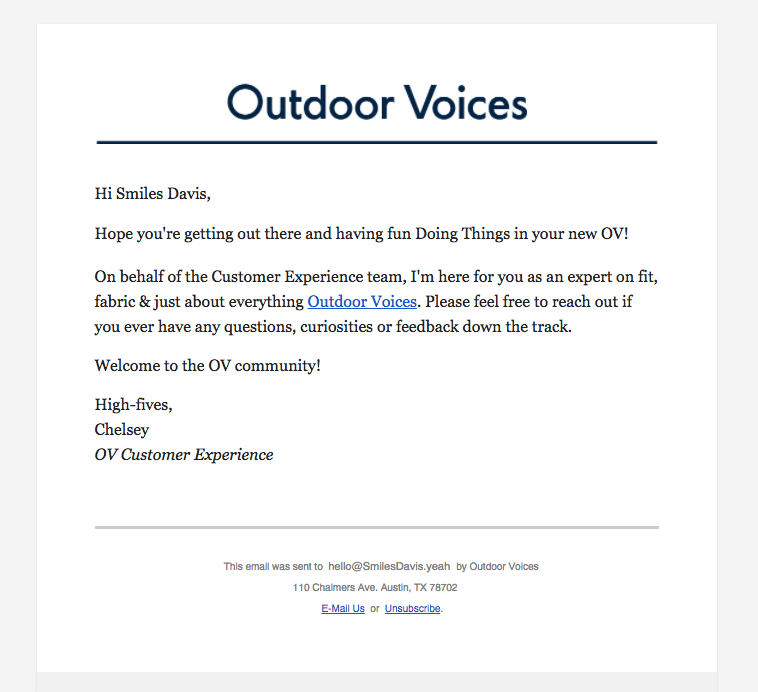
Even if a customer is brand new, it still pays to say thanks to begin your relationship, like this:

outdoor voices customer thank you email

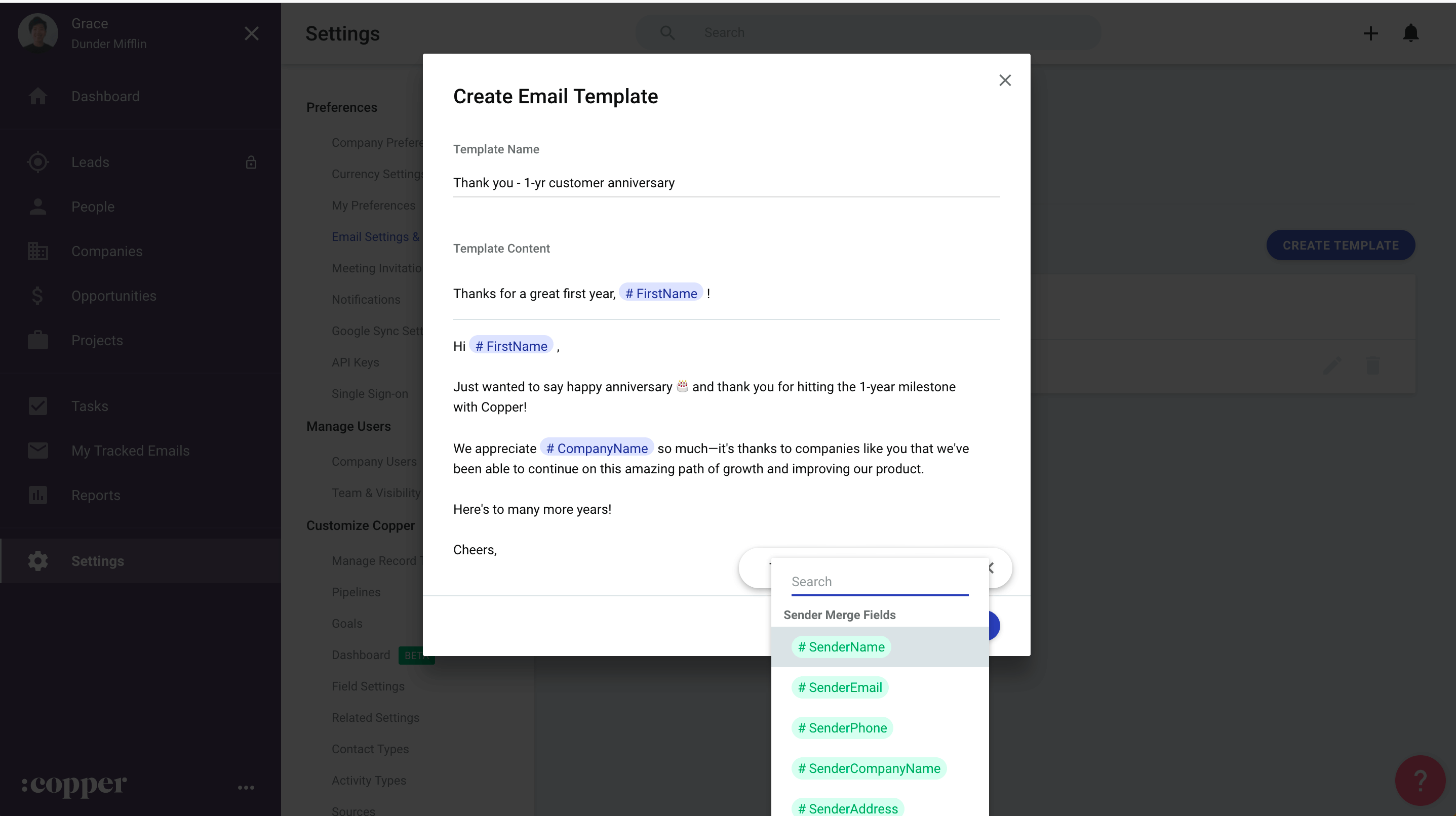
Pro-tip: If your CRM hooks up to Gmail or another email provider, you can personalize and automate your thank you emails. For instance, using Copper, you can quickly create a template for thank you emails:

customer thank you email templates in copper crm
CREATING AN EMAIL TEMPLATE THAT YOU CAN USE TO EMAIL CUSTOMERS EN MASSE—BUT THAT IS ALSO PERSONALIZED FOR EACH SENDEE.

In the example above, if you're sending a thank you email to customers who've all recently hit their one-year anniversary with you, use merge tags (the blue and green fields above) that’ll automatically fill out certain details, like the customer's name and company name, for you.

Automated, yet personalized. Magic.

A simple thank you can score you a client for life

It’s easy for sales reps to get caught up in stuffing their pipelines full of new leads and prospects.

But looking at the stats, the most valuable people in our pipeline are those who are already in business with us. The best way to keep that business flowing it to make sure those customers feel valued and appreciated.

Pick your moment and then pick your medium (handwritten notes, letters, and emails all work for different occasions)—and then start writing. If you send your thank you sincerely and at the right time, it can score you a customer for life.


Thanks for this post to


Despite all of the automation and hacks available in the modern business world, nothing builds a relationship quite the same way as saying “thank you.”